
Here’s something that sounds almost unbelievable: in 2026, scientists just mapped the full nerve network of the clitoris — for the first time ever. Yes, really.
Almost 30 years after researchers figured out the same thing for the penis, the clitoris — an organ that exists in half the population — has finally gotten its own detailed blueprint. And the result? It’s way more complex, more extensive, and honestly… more impressive than anyone expected.
Not Just a “Tiny Button” After All
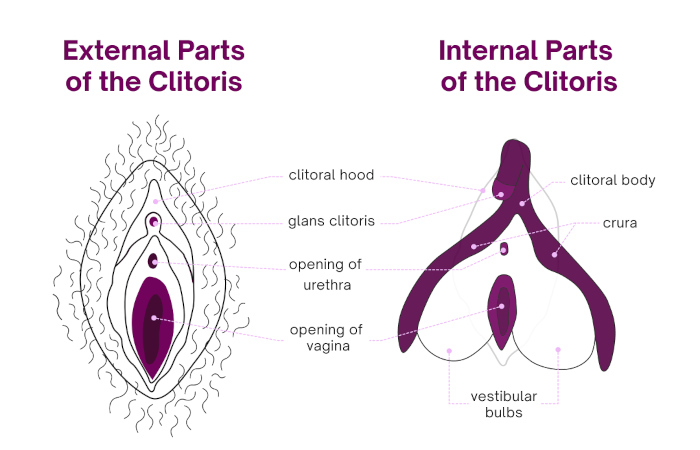
For years, the clitoris has been oversimplified in textbooks, often reduced to the small visible tip. But this new research reveals that what we see externally is just the tip of a much larger, hidden structure.
Using high-powered X-rays, scientists created a full 3D map and discovered a branching, tree-like network of nerves spreading through the surrounding pelvic area. (The Guardian)
We’re talking multiple nerve pathways extending into places like the labia, clitoral hood, and even the pubic mound. Basically, it’s less like a button — and more like an entire underground wiring system.
Science: “Wait… We Got This Wrong?”
One of the biggest surprises? Some of the anatomy doctors thought they understood… turns out to be wrong.
For years, it was believed that the main nerve (called the dorsal nerve) faded out as it reached the most sensitive tip. But the new scans show the opposite — it stays strong all the way through. (The Guardian)
Translation: the clitoris is wired for sensitivity far more intensely than old models suggested. Which, in hindsight, explains a lot.
Why This Actually Matters (A Lot)
This isn’t just one of those “cool science facts” you forget in five minutes — it has real-world impact.
Pelvic surgeries (including cancer treatments, reconstruction, and cosmetic procedures) often happen in areas close to these nerves. Without a proper map, surgeons have basically been navigating blind, sometimes causing accidental nerve damage and loss of sensation. (Boing Boing)
Now, with this detailed roadmap, doctors could avoid those critical pathways and reduce complications. That means better outcomes, fewer side effects, and a serious upgrade in patient care.
A Bigger Deal Than You Think
The research could be especially life-changing for survivors of female genital mutilation (FGM). Reconstructive surgeries don’t always restore sensation — but understanding exactly where nerves run could improve those chances significantly. (The Guardian)
And beyond medicine, there’s a bigger story here: why did it take so long?
Experts point to cultural taboos and a long history of ignoring female sexual anatomy. The clitoris wasn’t even properly included in anatomy textbooks until relatively recently — and even then, it was often dismissed or misunderstood. (The Guardian)
So this isn’t just a scientific discovery. It’s a correction.
The Takeaway
This whole thing feels like science catching up to reality.
An organ that’s central to female pleasure, health, and human experience has finally been mapped in detail — and surprise: it’s far more complex than anyone gave it credit for.
It’s part fascinating, part overdue, and part “how did we not know this already?”
But maybe the biggest takeaway is this:
Sometimes the most important discoveries aren’t about finding something new — they’re about finally paying attention to what was there all along.